You stand under a cast-iron street lamp, watching a line of shivering diners snake around a manicured corner. The air smells of expensive perfume and damp concrete, heavy with the expectation of a four-hundred-dollar tasting menu. Inside, plates are garnished with tweezers and foams meant to look like sea spray.
It feels like an event, but something about the sterile efficiency leaves you vaguely hollow. The entire operation is engineered specifically for the glowing screens of review platforms and culinary apps holding court in your pocket, making sure the magic feels mass-produced.
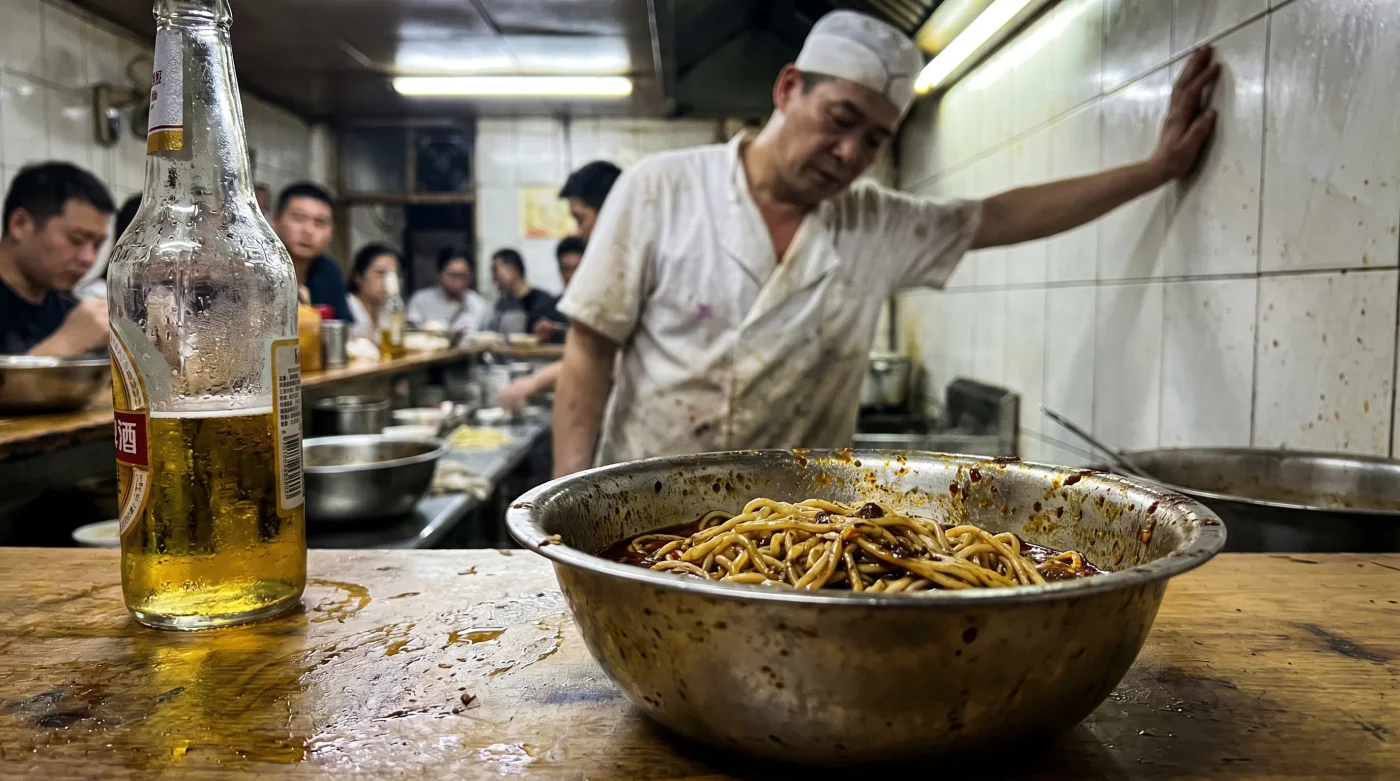
Just three blocks away, past the velvet ropes and valet stands, an entirely different rhythm pulses through the neighborhood. A rusted exhaust fan pumps out the deeply bruised scent of caramelized onions and rendered duck fat. There are no reservations here, just scuffed linoleum floors and the low hum of genuine relief.
This is the divide between curated tourism and actual sustenance. You are told the little red digital tires on your screen guarantee excellence, but they often function as a velvet trap, pulling you into hyper-commercialized zones designed to separate you from your cash with surgical precision.
The Spotlight Effect
Think of digital dining guides as a high-wattage theater spotlight. When you stand right in the center of the beam, everything looks flawless and deliberately arranged. But a spotlight does not just illuminate; it completely darkens everything standing just outside its harsh, artificial edge.
By chasing those coveted digital pins, you are voluntarily walking into real estate that prioritizes foot traffic and marketing budgets over neighborhood soul. The algorithms favor repetitive safety, meaning you are often funding corporate-backed cultural replicas rather than supporting independent, generational craft.
The shift happens when you stop asking the algorithm what is socially celebrated and start asking the local economy what is strictly necessary. The major flaw of the star system—its heavy bias toward heavily capitalized zip codes—is actually your greatest advantage if you learn how to read the negative space on the city map.
- TSA PreCheck biometric rollout forces mandatory facial recognition scans
- Boeing 737 MAX grounded routes trigger massive scheduling chaos
- Packing Cubes often increase luggage weight beyond airline limits
- Rimowa Aluminum Cabin cases dent easily despite premium pricing
- Suica Transit Card etiquette separates Tokyo locals from tourists
Elias is a thirty-four-year-old sous chef working the line at one of Chicago’s most photographed West Loop institutions. When his fourteen-hour shift ends at midnight, his apron stiff with veal stock and flour, he does not open a reservation app. He walks exactly twelve blocks west, crossing under a rattling L-train overpass, to a fluorescent-lit storefront with a handwritten menu taped to the glass. For Elias, paying for pretense is foolish; he wants the slow-simmered pozole that the neighborhood’s night-shift nurses and off-duty cab drivers quietly rely on.
Recalibrating the Local’s Table
Not every meal requires the same type of aggressive urban hunting. Depending on your mood and travel companions, bypassing the commercial glare requires a slight adjustment in how you filter the street-level noise.
For the Culinary Purist, you want the aggressive, uncompromised flavors that never make it onto a watered-down tourist menu. Ignore the heavily marketed district maps entirely. Look for neighborhoods where the primary language on the street signs physically shifts. You are hunting for physically faded menus, proving the kitchen does three things perfectly instead of thirty things adequately.
For the Atmosphere Seeker, if you crave the hum of a crowded dining room but hate the feeling of being processed like a barcode, avoid the city center squares. Walk directly toward residential zoning borders, where corner bistros and taverns serve as actual living rooms for the people who live upstairs.
For the Weary Wanderer, sometimes you just want a quiet corner and a plate of something warm after ten miles of walking. Seek out places with distinctly older waitstaff. When the people taking orders have been working the same floor for two decades, the neighborhood respects the establishment enough to keep it alive through brutal economic winters.
The Delivery Density Strategy
The most reliable compass for finding authenticity is not a curated restaurant guide; it is the logistics of the night-shift workforce. By cross-referencing neighborhood delivery density, you reveal the heat map of where the city actually sustains itself when the tourists are safely asleep in their hotels.
Open a standard local food delivery application late at night and deliberately zoom out from the commercial hubs. By applying a few mindful digital filters, you can successfully map the hidden culinary arteries that bypass the tourist traps entirely.
- Switch the app filter to pick-up only to visually locate where the physical kitchens are clustered outside the expensive downtown core.
- Scan for dense clusters of high-volume delivery orders in strictly residential or industrial zones between ten at night and two in the morning.
- Cross-reference these obscure addresses on a standard street map. If there is a cluster of food activity in an area with zero major hotels or tourist attractions, you have found a local artery.
- Walk to that exact intersection the next day for a late lunch.
The Tactical Toolkit is incredibly straightforward but requires discipline. Wait until at least eleven at night local time before opening the app. Set your search radius to three to five miles outside the immediate hotel district.
Always ignore professionally staged food photography on delivery profiles; you want the places that rely on flavor, not lighting.
Eating in the Quiet Corners
Bypassing the polished veneer of heavily marketed dining zones is not just about saving money or securing a minor badge of traveler’s honor. It is about actively rejecting the modern feeling of being a passive consumer strapped to a culinary conveyor belt.
When you sit down in a room that survives purely on local loyalty, your presence fundamentally shifts from a simple transaction to an act of quiet observation. You are no longer performing the expected routine of a traveler; you are quietly absorbing life exactly as it unfolds in a new city.
The food tastes genuinely better because it was cooked with the assumption that the person eating it will be back again next Tuesday. This profound grounding hospitality cannot be algorithmically generated by any screen.
The best meal in any city is the one being eaten in silence by the people who just finished cooking for everyone else.
| Key Point | Detail | Added Value for the Reader |
|---|---|---|
| Star Ratings | Prioritizes heavily capitalized zones and engineered menus | Saves you from paying the artificial ‘tourist premium’ |
| Delivery Heatmaps | Highlights late-night workforce orders outside the center | Reveals authentic, unpretentious local favorites |
| Aged Waitstaff | Indicates decades of steady neighborhood loyalty | Guarantees consistent quality over viral, fleeting trends |
Frequently Asked Questions
Do delivery apps really show better restaurants than curated guides? Yes, late-night delivery data highlights where local workers actually order from, bypassing the massive marketing budgets that dominate traditional review platforms.
What is the best time to check delivery density? Between 10:00 PM and midnight local time, when the tourist dining rush has completely ended and the neighborhood night-shift economy begins.
Should I completely ignore Michelin-starred locations? Not entirely, but recognize that stars often reflect a highly specific, engineered dining format rather than the everyday local culinary culture of the city.
How do I avoid unsafe neighborhoods when exploring off-grid? Always cross-reference the addresses on a standard map and visit these newly discovered local arteries during daylight lunch hours rather than late at night.
What physical signs indicate a true local establishment? Look for physically faded menus, older waitstaff, and a high volume of patrons who do not need to look at the menu before placing their orders.