You hear the satisfying, heavy click of the twin TSA locks snapping into place. The grooved silver shell of your cabin case catches the morning light spilling through the bedroom window. Packing it feels like securing your belongings inside a miniature bank vault. The precision of the interior flex-dividers and the cold touch of the metallic handle signal absolute, unyielding security.
Walking through the terminal, the silence of the wheels gliding over the smooth terrazzo reinforces the feeling of superiority. You bypass the generic, fraying fabric bags dragging behind hurried families. You assume that spending a premium sum on a heritage piece of luggage grants you immunity from the chaotic, bruising physics of modern air travel.
But the illusion fractures the moment you walk down a jet bridge toward a smaller regional commuter plane. The flight attendant politely intercepts you, explaining that the overhead bins are full and you must gate-check your pristine silver box. Down below, an underpaid baggage handler catches it off the slide and tosses it onto the tarmac with practiced, hurried indifference.
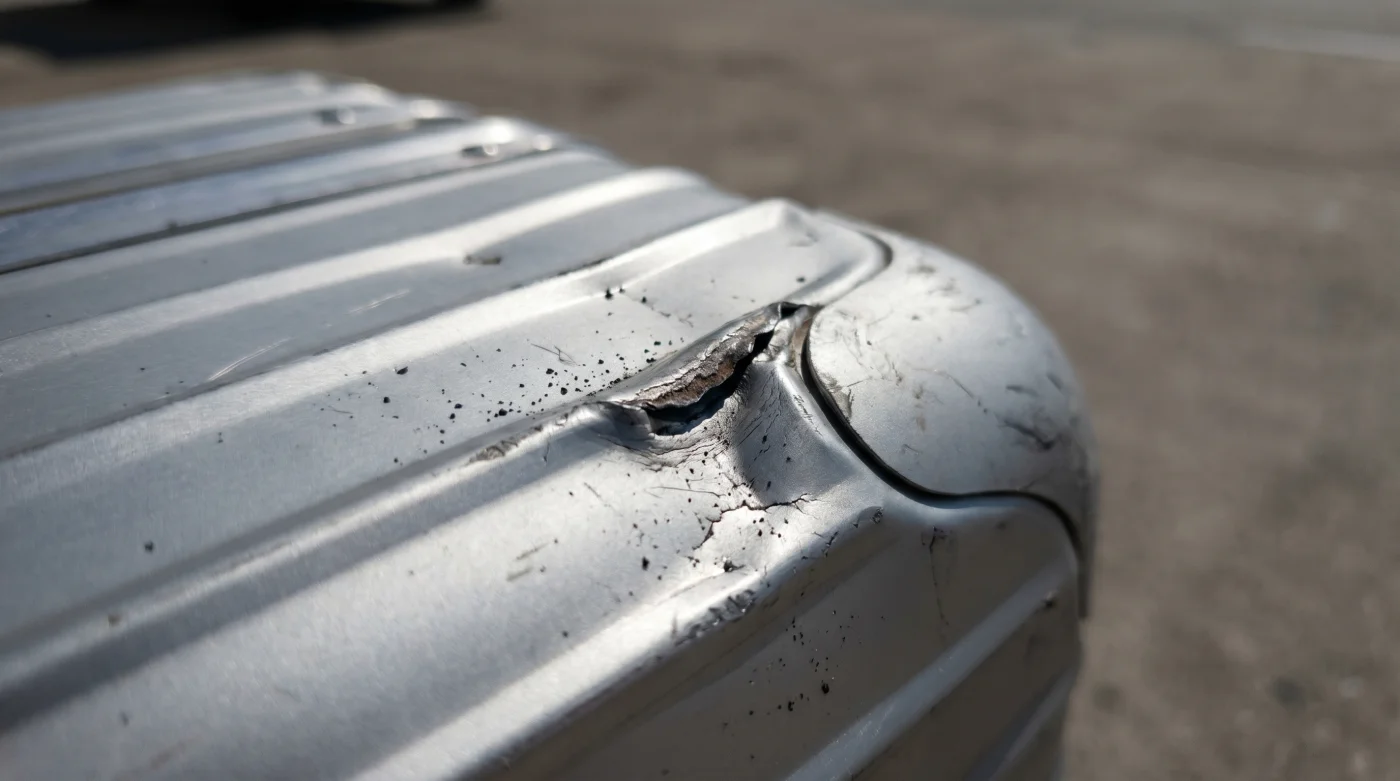
You watch from the oval window as your bag drops, hitting the concrete at an awkward angle that instantly caves the bottom left corner inward. The luxury price tag implies invulnerability against rough handling, but the physics of metal dictating failure tells a very different story. You suddenly realize that rigid frames, no matter the prestige of their logo, cannot argue with gravity.
The Armor Illusion and the Bamboo Principle
We grew up equating weight and rigidity with safety. If a structure feels like a military tank, we intuitively believe it must protect like a tank. But aviation environments do not involve slow, steady pressure; they involve sudden, violent impacts. When you subject a rigid, hard metal to a sudden, concentrated force, it has no way to disperse the kinetic energy.
Instead of bouncing, the aluminum absorbs kinetic energy by warping. It takes the hit, changes its molecular shape, and keeps the bruise forever. The secret to enduring the brutal environment of an airport apron is not standing firm against the blow; it is yielding to it.
This is why polycarbonate alternatives actually absorb impact better while aluminum permanently warps under heavy tarmac drops. High-grade plastic flexes inward upon striking the ground. It distributes the shockwave across its entire surface area, absorbing the trauma before popping right back out, much like a lung refilling with air after a heavy breath.
Consider Marcus Thorne, a 38-year-old commercial ramp agent working out of the icy, windswept tarmac at O’Hare. He moves hundreds of bags an hour through rain, sleet, and freezing temperatures. He notes that while passengers strut through the terminal with shining metallic cases, those same bruised and battered metal shells arrive in the belly of the plane looking like crushed soda cans if they catch the belt loader at the wrong angle.
Marcus deliberately prefers loading the high-end polycarbonate shells. He watches them bounce slightly off the rubber mats of the cargo hold, shaking off a four-foot drop from a slipping grip without a single structural complaint. To the people working in the belly of the beast, flexibility is the only true armor.
Matching Your Material to Your Mileage
Not all travel routines threaten your luggage equally. You have to align your aesthetic desires with the actual, physical mechanics of your regular transit routes. A material that thrives in one environment will fail miserably in another.
For the Cabin Purist: If you exclusively fly on wide-body jets in premium cabins with guaranteed overhead space, the metal aesthetic carries minimal risk. You control the handling completely, guiding the case from the trunk of your car directly to the overhead bin. The grooves remain pristine because the only stress the frame encounters is the soft carpeting of a hotel lobby.
For the Regional Connector: If your itinerary relies heavily on puddle-jumpers, CRJ-900s, or crowded flights where gate-checking is mandatory, metal becomes a massive liability. Every time you hand that bag over at the end of the jet bridge, you are rolling the dice against the unforgiving edge of a luggage cart. Here, high-yield plastics are the only logical, defensive choice.
For the Chronic Over-Packer: Aluminum frames have zero tolerance for spatial negotiation. If you try to force a rigid case closed over a bulging stack of sweaters, the pressure forces the hinges to warp. Once an aluminum hinge bends even a fraction of an inch, the waterproof seal is broken, and the latches will never align perfectly again. Polycarbonate cases utilize heavy-duty zippers and fabric spines that stretch and breathe, accommodating that extra pair of shoes without destroying the structural integrity.
The Luggage Longevity Toolkit
Shifting your strategy from rigid defense to flexible endurance requires a few practical adjustments before you make your next gear purchase. You need to evaluate the hardware and the shell with a cold, practical eye rather than romanticizing the marketing.
To ensure your gear survives the unseen violence of the cargo hold, rely on these tactical stress tests when evaluating a new carry-on:
- Test the flex: Press your thumb firmly into the center of the largest panel. It should yield slightly, like a thick layer of ice over moving water, proving its ability to absorb shock.
- Check the corners: Look for reinforced, rubberized or thickened polycarbonate bumpers rather than sharp metallic caps. The corners take 80 percent of all impact trauma.
- Evaluate the wheels: Dual-spinner wheels bolted through a flexible base will survive a sudden drop much better than single wheels mounted to a stiff, unyielding aluminum plate.
- Mind the closure: Zipperless metal latches bend out of alignment easily when the frame warps. Opt for water-resistant, self-correcting zippers that can shift and realign seamlessly after a heavy impact.
The Freedom of Letting Go
The quiet anxiety of waiting at the baggage carousel or lingering near the gate-check chute drains the joy from travel. When you spend the entire flight wondering if your expensive case will return intact, the gear has failed you before you even reach your destination.
Real luxury is not carrying a recognizable status symbol that requires delicate, constant care. True luxury is tossing your bag into the back of a taxi, dragging it over ancient cobblestones, and protecting your peace of mind by trusting the engineering to handle the abuse.
Some purists argue that the dents and scratches on an aluminum case represent travel history, a physical map of miles flown. But a dent that breaks the waterproof seal or misaligns the locking mechanism is a failure of function, not a romantic badge of honor. A broken tool is just a burden.
By choosing materials that forgive the environment rather than aggressively fight it, you remove a layer of friction from your transit. You reclaim your attention for travel, keeping your eyes on the city waiting outside the terminal doors, rather than worrying about the silver box rolling behind you.
The mark of truly exceptional gear is that it requires less of your attention, not more. It should silently absorb the chaos of the environment so you do not have to.
| Luggage Material | Impact Response Profile | Added Value for the Traveler |
|---|---|---|
| Aluminum Frame | Absorbs shock by permanently warping and denting upon impact. | High aesthetic appeal and rigid security, ideal for strictly controlled environments. |
| Polycarbonate Shell | Flexes inward to distribute kinetic energy, then pops back out. | Superior durability against tarmac drops and gate-check abuse, ensuring longevity. |
| Hybrid (Poly/Metal) | Plastic body absorbs impact while metal corners provide structural limits. | Balances flexibility with a structured frame, good for moderate travel demands. |
Frequent Flyer Queries
Can you pop a dent out of an aluminum suitcase?
Minor dents can sometimes be massaged out with specialized tools, but the metal is permanently stretched. It will never perfectly return to its original factory smoothness, and the structural integrity in that spot is permanently compromised.Do polycarbonate suitcases crack in extreme cold?
High-grade, pure polycarbonate is designed to withstand temperatures well below freezing without turning brittle. Cheaper ABS plastics will crack, but pure polycarbonate retains its flexibility even in a freezing cargo hold.Why do flight crews often use soft-sided luggage?
Flight crews prioritize durability, weight, and the ability to squeeze bags into impossibly tight crew compartments. Soft-sided ballistic nylon offers the ultimate flex and rarely suffers catastrophic structural failure from drops.Are aluminum cases heavier than plastic?
Yes. An aluminum carry-on can weigh between 9 and 11 pounds empty, consuming a massive portion of strict international airline weight limits before you even pack a single shirt.Is the zipper on a polycarbonate bag a security risk?
While standard zippers can be breached, premium polycarbonate cases use puncture-resistant, double-coil zippers that secure directly into a TSA-approved combination lock, providing excellent security for casual travel.