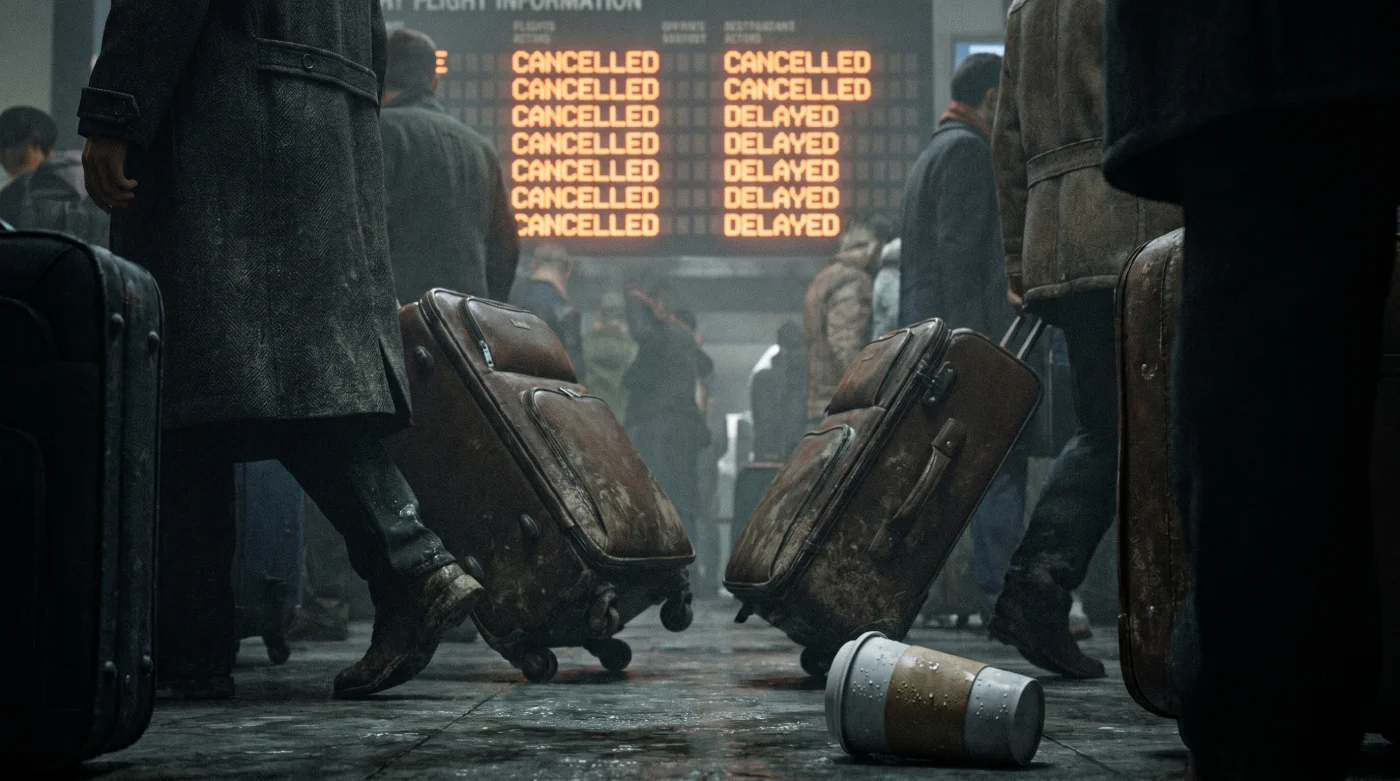
You stand at the edge of Gate B4, nursing a paper cup of lukewarm dark roast. The terminal smells faintly of industrial floor wax and stale pretzels. Outside the reinforced glass, a tug slowly pushes a massive metal cylinder away from the jet bridge. It is early, the sky bruised purple, and the departure board above you pulses with quiet authority.
Normally, you would board a sleek, factory-fresh aircraft without a second thought. But today, the rhythmic click of the board tells a different story. Sudden mechanical inspections have pulled the Boeing 737 MAX from the sky in rolling waves. Thousands of seats have simply vanished from the daily inventory overnight.
To absorb this holiday passenger surge, airlines are scrambling behind the scenes. They are pulling older, heavier jets from reserve hangars. You might look out the window and see a weathered 737-800 or a vintage 757 rolling up to your gate. The initial instinct is frustration. You booked a modern cabin, and now you are stepping back in time.
Yet, this mechanical disruption hides a quiet advantage. Understanding how to read this sudden logistics pulse completely changes your position on the board. You stop being a passive ticket holder and start seeing the grid.
The Phantom Fleet Swap
Think of an airline schedule like a tightly woven cotton sheet. When you pull a single thread—in this case, grounding a specific aircraft type—the entire fabric warps. The system relies on the MAX for fuel-efficient, high-frequency routes. Removing them creates a void that can only be filled by playing a massive game of logistical chess.
This is where the older jets become your asset. Airlines are swapping equipment to preserve the route network. These older planes burn more fuel and lack mood lighting, but they carry a secret trait that modern aviation has largely engineered away: physical space. The older cabins often feature thicker seat cushions, slightly wider aisles, and bulkheads that give your knees a fraction more breathing room.
- Packing Cubes often increase luggage weight beyond airline limits
- Rimowa Aluminum Cabin cases dent easily despite premium pricing
- Suica Transit Card etiquette separates Tokyo locals from tourists
- NYC MetroCard swipe errors increase vulnerability at turnstile bottlenecks
- Osprey Farpoint 40 dimensions bypass rigid European budget carriers
Marcus Thorne, a 44-year-old dispatch coordinator based in Dallas, spends his nights staring at glowing green monitors, orchestrating these exact swaps. When a route gets flagged for an equipment change, Marcus and his team have mere hours to find a replacement frame. ‘We aren’t just swapping planes,’ Marcus notes, sliding his finger across a complex radar map. ‘We are protecting the timeline. If I have to put an older 737-800 on a route meant for a MAX, the passenger might lose the seatback screen, but they gain a plane that historically pushes back faster because the loading zones are wider.’
Navigating the Reroute Ripples
When the equipment changes, the seating map scrambles. If you know how to react, you can secure a better position while everyone else is waiting for an email notification.
For the Schedule Protector
Older planes often fly at slightly different cruising speeds or require different gate procedures. If your app shows an equipment swap from a MAX to an older variant, your layover buffer just shrank. You need to monitor your connection window closely. A forty-minute layover in Atlanta is manageable on a normal Tuesday. During a fleet swap, it becomes a physical sprint.
For the Comfort Purist
The sudden swap is your chance to escape the middle seat. When a plane changes, the algorithm blindly reassigns passengers based on the new cabin layout. Premium economy rows often shift. A seat that was previously flagged as standard might suddenly become an exit row on the older airframe.
For the Carry-On Minimalist
Older airframes were built before the era of oversized roller bags. The overhead bins are distinctly smaller. If you are flying on a swapped route, you must board with the first group possible. Gate-checking bags becomes mandatory much earlier in the boarding process on these older variants.
The Reroute Routine
Handling this logistics pulse requires a minimalist, mindful approach. You do not need to call customer service and wait on hold for three hours. You simply need to read the signals and adjust your own positioning.
Keep a close eye on the first signs of a swap. If you see a notification about a slight time change—even just five minutes—open your reservation immediately.
- Refresh your seat map 48 hours before departure. This is when dispatchers lock in the replacement aircraft.
- Look for the unassigned premium seats. Older aircraft often have smaller first-class cabins but larger extended-legroom sections.
- Pack a dedicated power bank. Older planes frequently suffer from dead or entirely absent under-seat outlets.
Your tactical toolkit for this disruption should include a downloaded offline map of your connecting airport, a high-capacity power bank, and the airline’s dedicated app open to the flight status page, not just the static boarding pass screen.
The Rhythm of the Grid
We are conditioned to view travel as a pristine transaction. You pay money, you sit in a specific chair, you arrive. But a grounded fleet reminds us that aviation is a highly physical, wonderfully messy human endeavor. It is a massive kinetic puzzle breathing through a crisis.
When you learn to anticipate the mechanical shifts, the airport stops being a place of stress. It becomes an environment you can read. You realize that an older plane at the gate is not a downgrade, but a reliable workhorse pulled from the bench to make sure you get home. You trade the LED lighting for a thicker seat cushion, and you fly with the peace of mind that comes from knowing exactly how the machine operates.
The system never breaks; it only bends to accommodate the heaviest weight. Find the curve, and you find your comfort.
| Key Point | Detail | Added Value for the Reader |
|---|---|---|
| Equipment Swap | MAX replaced by older 737/757 | Opportunity to reselect a better seat in the newly loaded cabin layout. |
| Time Adjustments | Flight times shift by 5-10 minutes | Early warning system to verify and protect your connection buffers. |
| Cabin Features | Loss of modern screens and power | Reminder to pack heavy-duty power banks and enjoy thicker seating. |
Frequently Asked Questions
How do I know if my flight is affected by the MAX groundings? Check your airline app for the aircraft type. If it changes from a MAX variant to an older 737 or 757, your route has been swapped.
Will an older replacement plane delay my arrival time? Usually by no more than a few minutes. Airlines buffer their schedules, but remain vigilant if you have tight connections.
Can I change my flight for free if the aircraft changes? Many airlines allow a complimentary change if the equipment swap alters your departure by more than a certain threshold or removes a paid seat feature.
Why do my assigned seats change during a fleet swap? Older aircraft have different row configurations. The algorithm automatically shifts passengers to fit the physical constraints of the new cabin.
Are the older reserve planes safe for holiday travel? Absolutely. Older aircraft undergo rigorous continuous maintenance and are flown by the exact same highly trained crews.