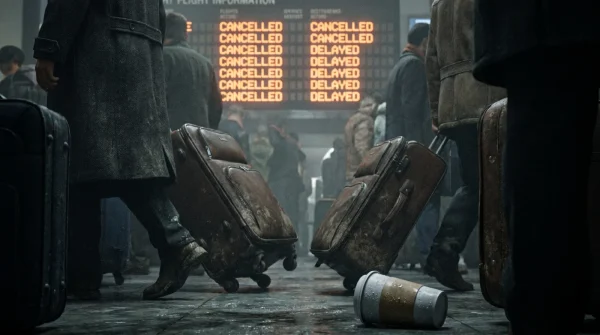
The fluorescent lights hum a low, constant note above the gray carpeting of Concourse B. You clutch your paper cup of lukewarm coffee, mentally rehearsing the familiar airport shuffle: phone in one pocket, ID in hand, shoes ready to slip off. The scent of industrial floor wax mixes with roasted pecans from a nearby kiosk. It is a 5:30 AM ritual etched into the muscle memory of anyone who flies out of domestic hubs on a regular basis. You expect a certain rhythm.
For years, the TSA PreCheck lane felt like a quiet agreement between you and the travel gods. You paid your fee, submitted your fingerprints, and in exchange, you earned the right to bypass the shoeless chaos. You kept your dignity intact while sliding past the uninitiated. The transaction was physical and temporary: a human being looked at your plastic card, looked at your face, and let you through.
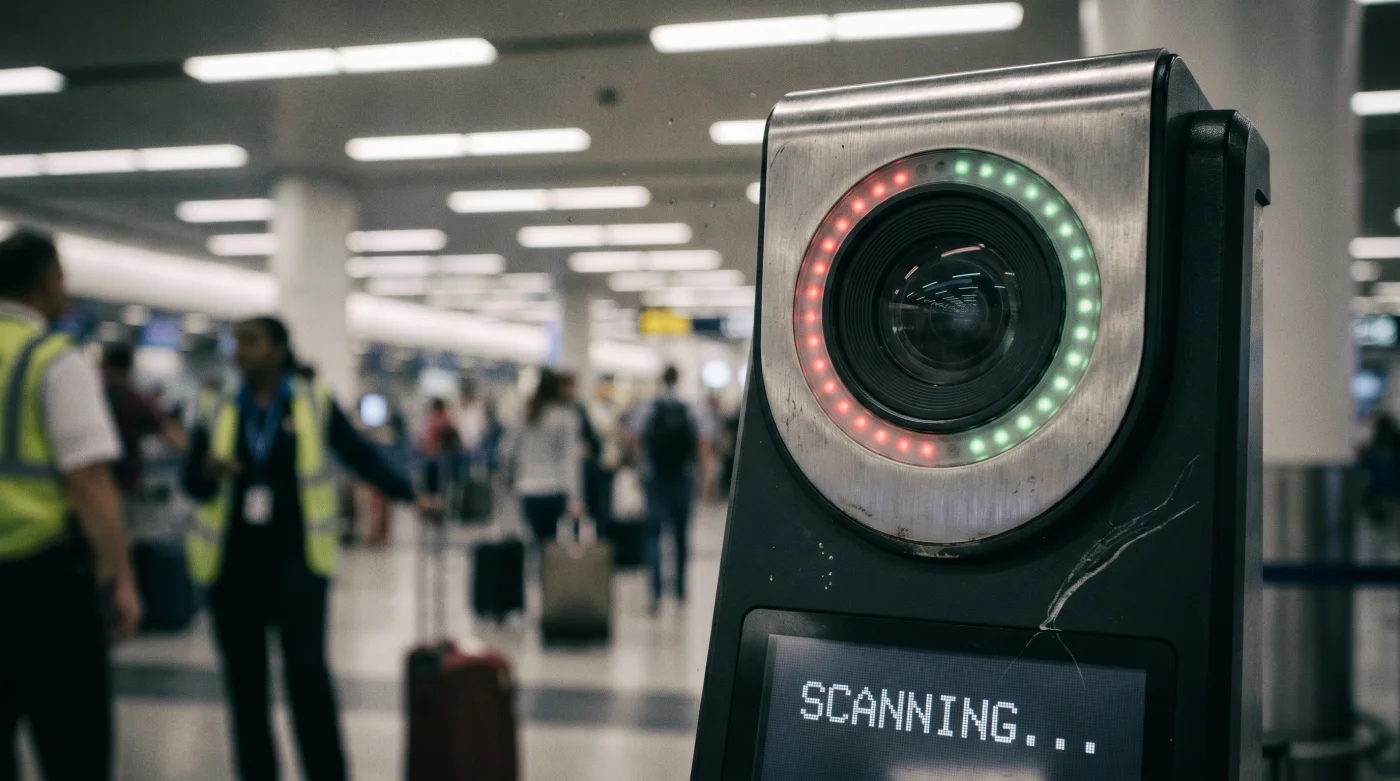
But next month, that familiar rhythm hits a jarring new note. The bored officer behind the plexiglass, holding a blue UV light to your driver’s license, is gone. In their place stands a sleek, waist-high pillar with a glowing ring of LEDs—a biometric camera pod waiting to map the topography of your face. Airports across the country are finalizing a massive operational shift, replacing human verification with an automated, unblinking lens.
The promise of shaving mere seconds off your wait time masks a sweeping shift in how your data is collected and stored. What is framed as a perk for the busy traveler is actually an entirely new infrastructure. Actively reclaiming your digital autonomy requires seeing this shift for what it is: a permanent pivot from proving who you are to letting an algorithm scan your biology.
The Tollbooth and the Tracker
Think of the traditional security checkpoint like a highway tollbooth. Under the old system, you handed over a coin, the wooden gate lifted, and you drove away without leaving a permanent trace of your passing. The new biometric pods operate like an automatic, state-wide transponder. They do not just open the gate; they register exactly who passed through, when, and with what geometric certainty, sending that encrypted packet of facial points to a remote server.
We are often conditioned to view frictionless technology as pure convenience. Yet, mindfully managing your personal footprint means recognizing the difference between a tool that serves you and a tool that catalogs you. You are no longer flashing a piece of plastic to a human who will forget your face in ten seconds. Your physical biology is becoming the boarding pass, logged against a sprawling cloud network of identification markers.
Sarah Vance, a 42-year-old data logistics auditor from Austin, Texas, caught wind of this transition during a quiet trial phase at a regional hub. Standing before the glowing iPad-like screen, she realized the camera was doing more than just verifying her against the flight manifest. It was creating a live template of her facial structure. Sarah started opting out immediately, choosing the manual pat-down and paper check. To her, the extra three minutes spent standing in front of a human agent felt like the last true luxury in modern transit: the luxury of unrecorded movement.
- Boeing 737 MAX grounded routes trigger massive scheduling chaos
- Packing Cubes often increase luggage weight beyond airline limits
- Rimowa Aluminum Cabin cases dent easily despite premium pricing
- Suica Transit Card etiquette separates Tokyo locals from tourists
- NYC MetroCard swipe errors increase vulnerability at turnstile bottlenecks
Every traveler holds a different boundary line when it comes to speed versus surveillance. Understanding your personal threshold dictates your checkpoint behavior moving forward. You do not have to accept the default settings of the terminal.
Navigating the Opt-Out Ecology
For the Speed Purist: You view the airport as a purely logistical hurdle. The biometric scan is your fast-pass, a way to keep your shoes moving on the linoleum. If you choose to embrace the pod, do so with clear boundaries. The camera will clear you in 1.5 seconds, but you must actively manage your frequent flyer privacy settings to keep that data siloed.
Navigating this system and protecting your background data means ensuring your airline profile is not linking this biometric data to third-party marketing partners. You must read the fine print on your carrier’s app to ensure your facial scan is not being monetized.
For the Privacy Advocate: You prefer the analog method. Opting out of the facial recognition scan is your legal right, but it requires vocalizing your choice before you step into the footprint decals on the floor. Prepare for mild friction. The agents are trained to push the automated line, so holding your ground requires a calm, polite refusal.
Traveling with children adds another layer to the equation. Actively shielding your family footprint becomes a priority when minors are asked to step up to the lens. Children’s biometric data is incredibly sensitive, and the policies surrounding its retention are notoriously murky.
For the Family Coordinator: By pulling your family into the manual verification lane, you teach your kids an early lesson in digital boundaries. You are trading sixty seconds of your morning for the peace of mind that your family’s faces are not sitting on a federal server.
The Tactical Checkpoint Routine
Handling this policy shift does not require a shouting match with security or a dramatic standoff at the conveyor belt. It requires a quiet, deliberate system. When you approach the TSA PreCheck queue, treat the interaction with mindful precision. You are in control of the pace.
The moment you see the glowing ring of the camera pod, establish a quiet boundary before the agent gives you instructions. Have your physical documents ready to bridge the gap.
- Approach the ID checker and clearly state, I am opting out of the biometric scan.
- Hand over your physical boarding pass and driver’s license simultaneously to shift their focus to the paper.
- Keep your feet firmly planted outside the floor markers meant to align you with the camera pod.
- If redirected toward the lens, gently reiterate your opt-out request with a neutral smile.
- Wait patiently for the agent to manually type your details or call a supervisor if they are unsure of the protocol.
The Tactical Toolkit requires preparation. Maintain a flat, neutral tone. Resistance breeds delays; polite refusal breeds compliance. Your calm attitude is your best deflector in the terminal.
- Time Cost: Factor in exactly 3 to 5 extra minutes for the manual check. Build this into your arrival window.
- Documentation: Keep a physical, printed boarding pass. Digital passes on your smartphone screen trigger the automated scanners more aggressively.
- The Shield: Wear a hat or glasses until you reach the agent to prevent ambient cameras from pre-scanning your face.
The Value of Friction
We are constantly sold the idea that faster is inherently better. The seamless walk from the curbside drop-off to the departure gate is marketed as the absolute pinnacle of modern travel. But occasionally, introducing a tiny bit of friction into your routine is a profound act of self-preservation.
When you pause to question the automated path, you remember that convenience often carries a silent invoice. Choosing to hand your ID to a human being instead of a server rack is not about paranoia or fear of the future. It is about actively participating in your own transit.
Airports have always been the testing grounds for public policy and behavioral shifts. How we allow ourselves to be processed at 5:30 AM before a flight eventually dictates how we are processed in stadiums, office buildings, and public squares. Taking three minutes to stand still, to ask for a human interaction, is a quiet form of rebellion. It proves that you are a traveler, not just a data point moving down a conveyor belt.
Privacy in transit isn’t about having something to hide; it’s about retaining the right to move through the world without leaving a digital shadow.
| Verification Method | Data Mechanism | Added Value for the Reader |
|---|---|---|
| Biometric Pod | Captures real-time facial topography to match against cloud databases. | Saves 30-60 seconds in line; ideal only if speed overrides data concerns. |
| Digital ID (Phone) | Transmits encrypted token via NFC to the TSA terminal. | Reduces physical wallet clutter while limiting facial mapping. |
| Manual Opt-Out | Visual check of physical ID and paper boarding pass by a human agent. | Guarantees zero new biometric data is added to government tracking arrays. |
Navigating the Biometric Checkpoint FAQ
Can TSA legally force me to use the facial recognition scanner?
No. Participation is currently optional for US citizens, and you retain the right to request a standard manual ID check without penalty.Will opting out cause me to miss my flight?
The manual check typically adds only two to five minutes to your wait time. Build a tiny buffer into your arrival, and your schedule remains secure.What happens to my face scan if I use the pod?
Officially, the TSA states that biometric templates are deleted shortly after verification, but privacy advocates warn that policy shifts could allow longer retention in the future.Do I need to opt out if I already have Clear or Global Entry?
Yes. Clear and Global Entry use their own biometric networks. The new TSA pods are an additional layer at the standard PreCheck line.How do I handle an agent who insists I use the camera?
Remain polite, do not step on the floor markers, and calmly state, I prefer the manual ID check today. Persistence without aggression always wins the interaction.