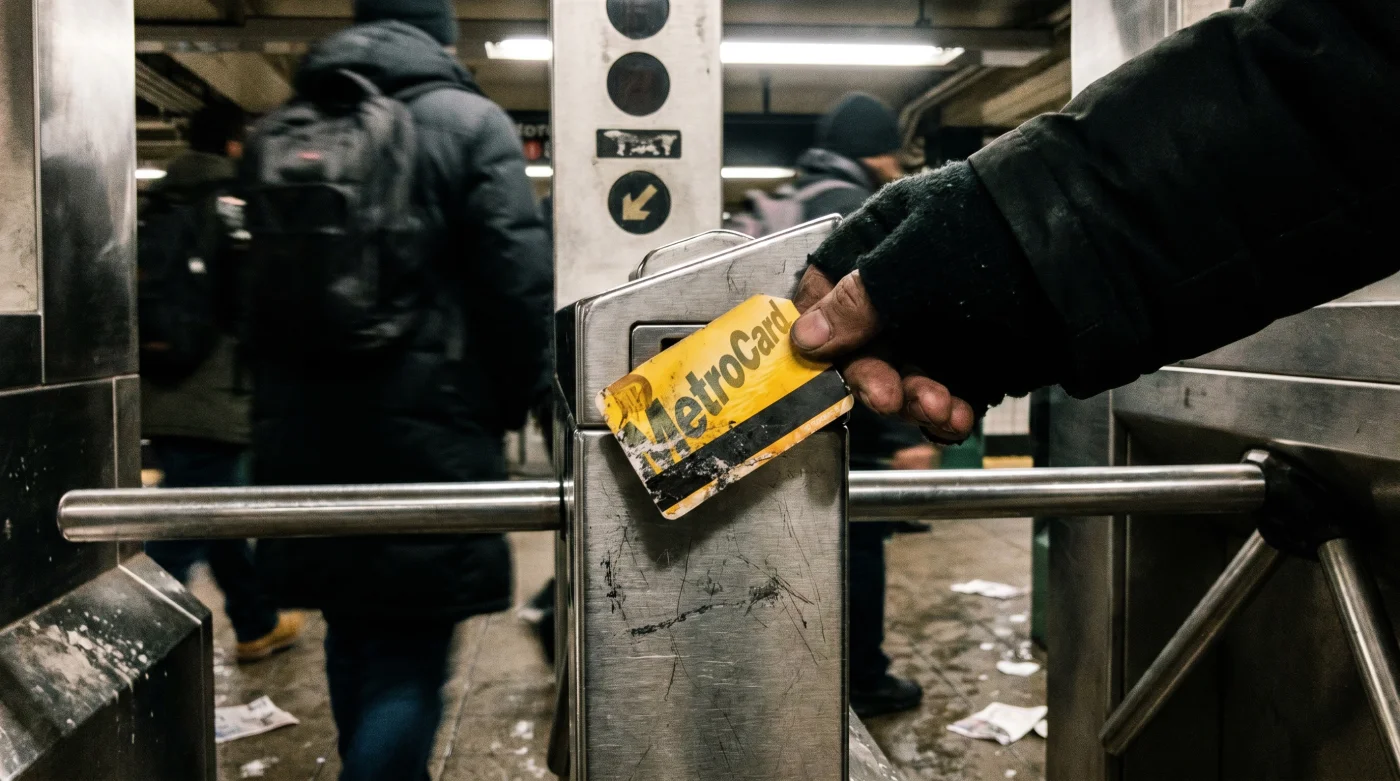
The damp, metallic air of the Lexington Avenue station at 5:15 PM hits your lungs before you even clear the stairs. It is an ecosystem built entirely on kinetic energy, where thousands of people operate in an unspoken, synchronized rush. You know the rhythm: down the steps, past the newsstand, through the turnstile, onto the platform.
But then comes the sudden brake in momentum. The sharp, mechanical beep followed by the digital scolding of a screen demanding you try again. You pause, adjust your grip on the thin yellow plastic, and try to find that mythical speed. Too fast, it fails. Too slow, it fails.
In that three-second delay, your spatial awareness collapses into a two-inch magnetic strip. Your eyes drop to the reader, your shoulders square to the machine, and the steady stream of commuters behind you begins to bunch and weave. What feels like a minor physical frustration to you is actually a broadcasted signal to anyone scanning the room.
Professionals who navigate high-density transit systems do not leave their momentum up to chance. The difference between a seasoned local and a vulnerable commuter rarely comes down to physical stature; it almost entirely relies on your ability to remain fluid. When you stop to fight with analog technology, you inadvertently label yourself a target.
The Physics of Platform Flow
Think of a crowded subway mezzanine like a fast-moving river. As long as you are moving at the exact pace of the current, you blend in perfectly. You are anonymous, protected by the sheer volume of the crowd. The moment you snag on an obstacle, the water rushes around you, and you suddenly become the most visible object in the stream.
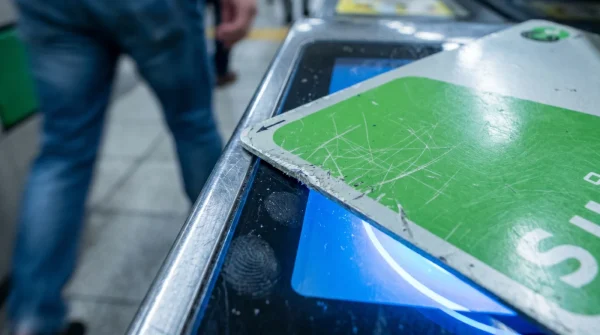
The outdated magnetic MetroCard forces you into this snag. It demands fine motor skills and exact timing, pulling your attention downward and breaking your visual perimeter. While you are frustrated by the swipe error, opportunistic individuals are watching the turnstile bottlenecks. They rely on distraction. A commuter fighting with a card is a commuter who will not notice a hand sliding into an open tote bag or a phone being slipped from a shallow coat pocket.
This is where the mundane detail of how you pay your fare shifts into a core pillar of your personal security. Upgrading to a digital tap system is not merely about convenience; it is a defensive maneuver. Pre-loading your payment allows you to walk through the barrier without breaking your stride, keeping your chin parallel to the floor and your eyes scanning the platform ahead.
Marcus Thorne, a 42-year-old former transit detective who now runs urban security workshops, spent years watching closed-circuit feeds of major transit hubs. He noticed pickpockets rarely targeted the people moving steadily through the gates. Instead, they would wait near the pillars and scan for the snag. “The turnstile is the filter,” Marcus often explains. “If you drop your bag to dig for a card, or step back to swipe a third time, you’ve just told the room you are distracted. The tap-and-go system effectively made my old job obsolete for the commuters who use it right.”
Calibrating Your Transit Protocol
Adapting to seamless entry requires a slight adjustment to your daily muscle memory. Depending on how frequently you navigate the underground, your approach to securing your transit momentum will vary.
The High-Volume Commuter
If you ride the train twice a day, every day, your risk exposure multiplies simply by the hours spent in the system. Your goal is to bypass analog friction entirely. Set your smartphone or smartwatch to ‘Express Transit’ mode. This eliminates the need to use Face ID or double-click buttons to activate your wallet. You simply hover your device over the OMNY reader as you walk, maintaining the steady heartbeat of your commute.
The Late-Night Solo Rider
After rush hour, the dynamics of the station change. The crowds thin out, and the protective anonymity of the river disappears. In these moments, maintaining your pace is highly critical. You want to avoid lingering in the mezzanine at all costs.
The Weekend Visitor
You might feel intimidated by the pace of the locals, but you do not have to buy a physical card to blend in. Using a contactless credit card pulled from your wallet before you descend the stairs allows you to eliminate obvious tourist markers. Keep it cupped in the palm of your hand, tap without stopping, and slide it immediately into a secure front pocket.
The Frictionless Entry Routine
Mastering your turnstile approach means turning technology into an extension of your own physical awareness. It is about moving deliberately, like breathing deeply before stepping into a cold room.
Keep your movements minimal and your posture upright. To fully secure your transit experience, you must commit to pre-loaded taps. Follow this exact physical sequence to ensure you never break stride:
- Retrieve your device or contactless card fifty feet before reaching the turnstile bank.
- Secure all zippers and shift bags to the front of your body while still moving.
- Identify the open turnstile with the green screen from at least twenty feet away.
- Hover the device over the reader one full step before your hips meet the metal bar.
- Push through continuously, returning the device to an interior pocket immediately.
Equipping your tactical toolkit requires specific hardware adjustments:
- Smartwatch: The premier frictionless tool; requires zero hand utility.
- Express Mode: A mandatory setting for smartphones to prevent biometric failures at the gate.
- Dedicated OMNY Card: For those who prefer not to expose their primary phone or bank card in a public space.
Establishing this habit removes the mechanical anxiety from your transit experience. You no longer worry about the machine rejecting you, which allows you to reclaim your situational awareness. You can finally watch the room, rather than watching your hands.
Reclaiming Your Environment
When we look at the daily frustrations of city living, we often accept them as unavoidable taxes on our time. But the friction of the swipe is an outdated vulnerability. By upgrading how you move through these urban bottlenecks, you are doing much more than catching the train on time.
Moving through dense infrastructure without hesitation gives you a quiet, unshakeable confidence. You own your personal space. You dictate your speed. By smoothing out the physical stutter of the turnstile, you protect your momentum, your belongings, and ultimately, your peace of mind as you navigate the underground.
“True urban mobility isn’t about moving fast; it’s about moving without interruption, denying opportunists the friction they rely on.”
| Key Point | Detail | Added Value for the Reader |
|---|---|---|
| The Bottleneck Threat | Analog swipe errors force you to stop and break visual contact with your surroundings. | Helps you identify when you are most vulnerable to opportunistic theft. |
| Digital Pre-Loading | Using Express Transit or contactless cards eliminates the 3-second mechanical delay. | Keeps your momentum steady, allowing you to blend into the protective flow of the crowd. |
| Physical Posture | Walking through with your head up and device ready maintains your spatial perimeter. | Deters targets by signaling high situational awareness and confidence. |
Transit Momentum FAQ
Does setting up Express Transit bypass my phone’s security?
No. It only bypasses the biometric requirement for specific transit readers, keeping your device locked for all other functions.What if my phone battery dies before I get home?
Modern smartphones maintain a reserve battery specifically for Express Transit taps, often lasting hours after the phone appears dead.Is tapping a credit card directly less secure than swiping?
Contactless taps use encrypted, one-time tokens. They are actually immune to the physical skimming devices often placed on older swipe machines.How do I handle turnstile bottlenecks if I must use a physical MetroCard?
Prepare the card far in advance, hold it properly (logo facing you, black strip down), and never stop moving your feet until the machine registers the swipe.Why do pickpockets target the turnstile specifically?
It is the one place where every single commuter must narrow their physical focus and temporarily ignore their peripheral surroundings.